
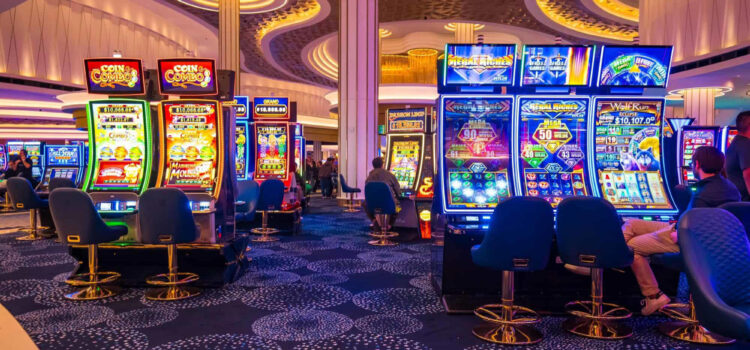
Gambling is when you risk something valuable on an outcome you can’t totally control, hoping to win something more. This idea’s been around for thousands of years, popping up in almost every culture. Today, gambling comes in all shapes—casinos, sports betting, lotteries, online poker, you name it.
Every type of gambling needs three basic things: something of value at risk, a bit of chance, and the possibility of a prize. The math behind gambling shapes your odds, and knowing how odds work can help you make smarter choices.
Whether it’s pure luck like slot machines or a mix of skill and luck like poker, the house almost always keeps an edge. That edge means, over time, the casino wins.
This article breaks down how gambling actually works, from ancient dice games to modern betting platforms. You’ll get a look at different types, how to read odds, what goes on behind casino doors, and the real risks.
There’s also some practical advice if you want to gamble but keep it under control.
What Is Gambling?
Gambling means risking something valuable on an uncertain outcome, hoping to win more than you put in. There are three key parts: what you risk, the uncertainty, and the prize.
It can be all about luck, all about skill, or somewhere in between. And it takes on different forms depending on how you get involved.
Core Elements of Gambling
Every gambling activity needs three things. First, you put up consideration—usually money, but it could be anything valuable.
Second, there has to be risk. You can’t know the outcome for sure. You’re betting on something that could go either way.
Third, there’s a prize. You’re hoping to get more back than you risked. If there’s no chance to win extra, it’s not really gambling.
You see these three parts everywhere. Buy a lottery ticket? You pay money (consideration), the numbers are random (risk), and you could hit a jackpot (prize).
Play poker? You bet chips (consideration), cards and opponents are unpredictable (risk), and there’s a pot to win (prize).
Chance Versus Skill
Games of chance are all about luck. Slot machines, roulette, lotteries—your choices don’t really change the outcome.
Games of skill let your decisions and experience matter. Poker and sports betting reward people who know what they’re doing, though luck still plays a part.
Most gambling mixes both. Horse betting takes some research, but the race itself is unpredictable. Blackjack involves strategy, but the cards? Totally random.
If it’s pure chance, you can’t improve your odds by practicing. If skill matters, studying up can help.
Betting Versus Gaming
Betting means wagering on something you don’t control—a sports game, a horse race, whatever. You’re just predicting what’ll happen.
Gaming means you’re in the action—playing cards, rolling dice, spinning slots. You’re part of the game and betting on yourself.
Sometimes the line blurs. Poker? You’re playing, so it’s gaming. Sports betting? You’re on the sidelines, so it’s betting. Both count as gambling, though.
A Brief History of Gambling
Gambling’s been around for ages—literally thousands of years. Ancient people used dice, animal bones, and all sorts of objects to play games of chance.
Ancient Origins and Early Evidence
Archaeologists have found dice and gambling gear in old tombs and settlements. Even in ancient China and Rome, there were laws about gambling—so it was already a big deal.
A lot of early gambling came from religious rituals. People would toss sticks or bones to see what the gods wanted, and that slowly turned into betting on the results.
Ancient Egypt even punished chronic gamblers with forced labor. Gambling pops up in religious texts, too—like Roman guards casting lots for Jesus’s clothes in the Bible.
Gambling in Different Cultures
Every culture seemed to have its own gambling traditions. Ancient Greeks played dice games so often that their word for justice came from “to throw”—as in, throwing dice.
In Sweden, dice were even used to settle court cases until the early 1800s. China invented keno centuries before European lotteries, using it to raise money for the state.
Religious texts from Judaism, Islam, and Buddhism all talk about gambling, usually with some rules or warnings. For a lot of ancient people, gambling was tied to fate or destiny, not just fun.
Societies that believed in luck, gods, or spirits tended to gamble more, maybe hoping to win favor through games.
Growth of Casinos and Lotteries
The 15th century was a turning point—governments started running lotteries to raise cash. By the 1600s, legal gambling houses were opening up.
The Ridotto in Venice opened in 1638, one of the first official casinos. Mathematicians started studying these games, which led to probability theory. Suddenly, gambling wasn’t just luck—it was something you could analyze.
Sports betting got organized in the late 1700s. Once money became the standard currency, bets shifted from goods or favors to cash.
Modern Legalization and Regulation
The 20th century changed everything. Gambling went from being seen mostly as a vice to something more like entertainment.
By the early 2000s, most people in Western countries gambled at least once in a while. The Internet exploded in the ’90s, making gambling available to millions who’d never set foot in a casino.
But with that came problems—pathological gambling became more visible. In the ’80s and ’90s, medical experts recognized it as a real disorder, not just a bad habit.
Turns out, just over 1% of people are affected. Treatment programs and therapy started popping up, and now most countries require gambling sites to offer help for problem gamblers.
Types of Gambling and Popular Games
Gambling comes in a bunch of flavors—casino games, sports betting, lotteries, and all the online stuff. Each has its own quirks and risks.
Casino Games Overview
Casino games fall into two big buckets: pure chance, and chance mixed with skill. Slot machines are all luck—just spin and hope.
Modern slots have video screens, bonus rounds, and huge progressive jackpots that keep growing until someone wins. Table games are a bit more varied.
Blackjack gives you some of the best odds if you know basic strategy—house edge can be as low as 0.2%. Roulette is betting on where a ball lands on a spinning wheel. Baccarat is about picking player or banker. Craps is all about the dice.
Poker is different since you’re playing against other people, not the house. Texas Hold’em and Omaha are super popular. Video poker mixes slot machines with poker, and if you play right, your odds are actually decent.
Every game has its own house edge. Slots usually take 2% to 15%. Table games vary depending on the rules and how you play.
Sports Betting Explained
Sports betting is all about putting money on the outcome of sporting events. You use a sportsbook that sets the odds.
Common bets include point spreads, money lines, and over/unders. In-play betting lets you wager while the game is happening, with odds changing on the fly.
Betting exchanges let you bet against other people, not the house. Fantasy sports have you build teams of real players and score points based on their actual games.
Daily fantasy contests last just a day or a week. Esports betting is a thing now too, covering big video game tournaments with odds just like regular sports.
Football, basketball, and soccer get the most action. Horse racing has its own scene, with exotic bets like trifectas and exactas.
Lotteries and Bingo
Lotteries mean buying tickets with number combos for a shot at massive jackpots. Drawings are on a schedule, and honestly, your odds of hitting it big are tiny.
Powerball and Mega Millions sometimes have jackpots in the hundreds of millions. Scratch cards are instant—you just scratch and see if you won.
They’re cheap, usually $1 to $20 per card. Bingo is marking off numbers as they’re called, hoping to complete a pattern first.
Churches and community centers love bingo, but there are online versions too. All these games are pure luck—no strategy helps.
They’re popular because they’re simple, low-stakes, and there’s always the dream of a big win.
Online Gambling Platforms
Online casinos let you play hundreds of games from your phone or computer. You’ll find digital slots, table games, and video poker.
Some sites offer thousands of slot themes and features. Live dealer games stream real people dealing cards or spinning wheels.
You can chat and play blackjack, roulette, baccarat, or poker with real dealers. It feels a bit more like being in a real casino.
Poker rooms connect you with players from all over for cash games and tournaments. The site handles the cards and the pot, taking a small cut called rake.
Buy-ins can be tiny or huge. Online gambling sites need licenses to operate legally.
Good ones show their license info and use encryption to keep your data safe. Payments can be made with cards, e-wallets, or even crypto.
Most sites let you play for free or for real money.
Understanding Gambling Odds and Probability
Odds show you what you could win and how likely something is to happen. The house edge is the built-in advantage casinos and bookies have so they make money in the long run.
Types of Odds Formats
Odds come in three main styles, depending on where you’re betting. Decimal odds are big in Europe and Canada—they show your total payout, including your bet.
So, 2.50 odds mean a $10 bet pays $25 total ($15 profit, plus your $10 back). To get the implied chance, divide 1 by the decimal (1 ÷ 2.50 = 40%).
American or moneyline odds use plus and minus signs. +150 means you win $150 on a $100 bet. -200 means you have to risk $200 to win $100.
You calculate the implied probability differently for each: positive odds use 100 ÷ (odds + 100), negative odds use the absolute value of odds ÷ (absolute value + 100).
Fractional odds, common in the UK, look like 5/1 or 3/2. The first number is what you win, the second is your stake.
At 5/1, you get $5 for every $1 bet. To get the probability, divide the bottom number by both numbers added together (1 ÷ 6 = 16.67% for 5/1).
Calculating Probability and Expected Value
Probability is just a way of measuring how likely something is to happen, usually as a percentage or a fraction. In European roulette, for example, there are 18 red pockets out of 37, so betting on red gives you an 18/37 chance—about 48.65%.
Knowing these odds is pretty handy when you’re trying to figure out if a bet is actually worth it.
Expected value (EV) tells you what a bet is worth on average if you repeated it a bunch of times. You get it by multiplying your chance of winning by your profit, then subtracting the chance of losing times your stake.
If you put $10 on red in European roulette, here’s what that looks like: (0.4865 × $10) – (0.5135 × $10) = -$0.27. Basically, you’ll lose about 27 cents per $10 bet if you keep playing.
Random number generators (RNG) keep things fair in digital gambling. These algorithms spit out thousands of numbers every second, deciding the outcome of online slots and virtual table games the instant you hit play.
House Edge and House Advantage
The house edge is the cut the casino expects to keep from every dollar wagered. It’s built into every game to make sure the operator turns a profit, no matter how things go in the short run.
Say a game has a 2% house edge—on average, the casino pockets $2 for every $100 you bet.
Different games have different edges. Blackjack (if you play smart) has about a 0.5% edge, while American roulette is up at 5.26%.
Slots? Those can range from 4% up to a whopping 15%, depending on the game.
| Game | Typical House Edge |
|---|---|
| Blackjack (basic strategy) | ~0.5% |
| Baccarat (banker bet) | 1.06% |
| European Roulette | 2.70% |
| American Roulette | 5.26% |
| Slots | 4-15% |
As you keep betting, the house edge adds up. You might get lucky sometimes, but the math always leans toward the casino.
Lower house edge games give you a better shot at stretching your bankroll, if not actually beating the system.
How Gambling Works: Behind the Scenes
Behind the glitz, gambling relies on math and mechanics that tip things in the house’s favor—but still give you a shot at winning.
Modern gambling is a mix of random number generation, strict regulations, flashy digital platforms, and all sorts of bonuses designed to keep you playing.
Game Design and Randomness
Every game runs on its own math. With slots and online games, it’s all about the RNG—basically, a computer program that spits out unpredictable results every millisecond.
Hit spin or deal, and the RNG picks a number that determines what you get.
Physical games like roulette or dice? Those depend on real-world randomness. The spin of the wheel or the bounce of the dice can’t be rigged or predicted.
Key randomness elements:
- RNG software cycles through millions of number combos nonstop
- Each spin or hand is separate from the last—no “hot streaks”
- Game designers set payout percentages that shape long-term returns
- Testing labs check that games are genuinely random
The house edge is baked right into the payouts. If a slot says it returns 95%, you’ll probably get back $95 for every $100 bet—over time, anyway. Of course, a single session could go anywhere.
Role of Licensing and Regulation
Casinos and betting sites can’t just open up shop; they need licenses from government authorities.
Bodies like the UK Gambling Commission set rules that operators have to follow. It’s all about protecting you from shady business and making sure games aren’t rigged.
Operators are required to keep your funds separate from their business accounts. That way, if the company goes under, your money isn’t swept away with it.
Independent testers like eCOGRA check gambling sites regularly. They make sure the RNGs are working, payouts are legit, and disputes are handled fairly.
You’ll usually spot a certification seal on licensed sites.
Regulatory requirements include:
- Background checks on owners and execs
- Regular financial audits
- Responsible gambling tools and self-exclusion
- Honest advertising
- Secure data protection
Online Gambling Technologies
Online gambling runs on a bunch of software layers. The site you see is just the front; behind the scenes, there’s account management, payment processing, and security tech.
SSL encryption scrambles your info so hackers can’t grab it. It’s the same stuff banks use.
Some sites use two-factor authentication, so you’ll need a code from your phone to log in. Annoying, maybe, but it does help keep your account safe.
Payment systems connect to banks and providers to handle deposits and withdrawals. Before you can cash out, you’ll probably have to verify your identity (that’s KYC—Know Your Customer).
Technology components:
- Real-time data streaming for live odds
- Cloud servers handling tons of users
- Mobile apps for gaming on the go
- Geolocation to make sure you’re playing somewhere legal
Casino Promotions and Dynamic Odds
Casinos love promotions. Welcome bonuses are everywhere, but they usually come with strings attached—like having to bet your bonus 30 or 40 times before you can cash out.
Odds in sports betting aren’t fixed. They move constantly as people place bets and new info comes in.
If everyone bets on one team, the odds shift to balance things out. Bookmakers want to make sure they get paid, no matter who wins.
Sportsbooks use algorithms that track injuries, weather, and betting volume to tweak odds every few seconds. That way, the house keeps its edge and stays competitive.
Casinos also watch your play and offer tailored bonuses to keep you coming back. High rollers get extra perks.
Risks of Gambling and High-Risk Behaviors
Gambling isn’t just about the money you might lose. It can mess with your mental health, relationships, and even your whole sense of stability.
Certain habits and ways of thinking can make things a lot worse.
Financial Losses and Debt
The house always has the advantage, so odds are you’ll lose money in the long run. That’s just how the games are built.
Losses can pile up fast, draining your savings before you realize it.
Some people start using credit cards or loans to keep gambling. That’s a dangerous spiral—borrowing money for an activity that’s unlikely to pay you back.
When gambling money comes from essentials, it can lead to unpaid bills, losing your home, or not being able to buy groceries.
It’s wild, but people gambling at harmful levels make up about 60% of all gambling revenue. The impact doesn’t just hit the gambler; it can hurt everyone in the household.
Chasing Losses and Emotional Distress
Chasing losses means you gamble more, hoping to win back what you’ve lost. It’s an emotional reaction—the pain of losing and the hope that a win is just around the corner.
Usually, chasing makes things worse, digging an even deeper hole.
The stress from gambling losses can be brutal. Anxiety, depression, shame, guilt—they all pile up as debts grow and relationships get strained.
Sometimes, people gamble even more to escape those feelings or to try to fix their finances.
It’s grim, but gambling disorder is linked to a much higher risk of suicide. Studies say people with this disorder are 15 times more likely to die by suicide. One in five attempts or completes suicide—a staggering rate compared to other addictions.
Cognitive Biases and Gambler’s Fallacy
Your brain can trick you when you gamble. The gambler’s fallacy is a classic mistake—thinking that if something’s happened a bunch (like a coin landing heads five times), the opposite is “due.”
But each flip or spin is independent. There’s no such thing as “due.”
Games are often designed to take advantage of these mental errors. Slot machines, for example, use near-misses and flashy sounds to make you feel like you’re winning—even when you’re losing money overall.
These tricks keep people playing longer than they planned.
Teenagers are especially at risk. Their brains are still developing, so they’re more likely to take risks and less likely to resist the lure of a big win.
Signs and Impact of Problem Gambling
Problem gambling shows up when betting starts to hurt your life—even if you don’t have a full-blown disorder.
Warning signs? Spending rent or grocery money on gambling, hiding your losses, or lying about how much you’ve lost.
Pathological gambling means you’ve lost control, gambling takes priority over everything else, and you keep going despite the fallout. All three have to be there for an official diagnosis.
The damage doesn’t stop with the gambler. For every high-risk gambler, about six other people are affected—family, friends, even coworkers.
Families can break down, finances get strained, and sometimes there’s even violence or neglect, especially when kids are involved.
Problem gambling can also link to mental illness, crime like theft or fraud, and a breakdown in community trust.
Certain risk factors—being young, single, poorly educated, broke, or going through a major life crisis—all make gambling problems more likely.
Responsible Gambling and Player Protection
If you’re going to gamble, you’ve got to manage your time and money, know the signs of trouble, and use the tools available to keep things in check.
These steps help you stay in control and avoid real harm.
Setting Limits and Bankroll Management
Only gamble with money you can afford to lose—after you’ve covered rent, bills, food, and savings.
Bankroll management is about deciding how much to bet each time, based on your total gambling stash. A lot of folks stick to 1-5% per wager, which helps soften the blow of losing streaks.
Most gambling sites let you set deposit limits—daily, weekly, or monthly. You can also set loss limits, so you’re automatically paused if you drop too much.
Time limits track how long you’ve been playing or log you out after a set period.
Keep gambling expenses separate from your regular budget. It’s easy to underestimate how much you’re really spending unless you keep track.
Self-Exclusion Programs
Self-exclusion lets you ban yourself from gambling sites or venues for a set time. Once you’re on the list, operators have to block your access.
Online, your account is usually blocked right away, and you can’t just open a new one. In-person, casinos use a database to keep you out.
Common self-exclusion options:
- Single operator exclusion (just one casino or site)
- Multi-operator exclusion (covers several venues in a group)
- State or national registries (all licensed operators in the region)
- Third-party tools like GAMSTOP (UK) or Betblocker (international)
Exclusion can last from six months to forever, and you usually can’t change your mind until the time’s up.
Recognizing and Preventing Gambling Harm
Red flags include spending more than you planned, chasing losses, borrowing to gamble, or skipping out on responsibilities. Feeling anxious or irritable when you try to cut back is another sign.
Gambling crosses the line into harm when it messes with your money, relationships, job, or mental health. The slide from casual fun to problem gambling is often slow.
Prevention starts with accepting that you can’t control the outcome. Chasing losses is a losing game.
Some operators use software to spot risky patterns—like rapid betting increases or marathon sessions. These can trigger reminders, time-outs, or even a call from support.
Support Resources and Tools
There’s help out there if gambling starts to get out of hand. National and regional helplines offer free, confidential support.
The National Council on Problem Gambling runs 1-800-GAMBLER in the US, which can connect you to local resources or counseling.
Key support resources:
| Resource Type | Examples | Services Offered |
|---|---|---|
| Helplines | 1-800-GAMBLER, GamCare | Crisis support, counseling referrals |
| Therapy | Gamblers Anonymous, counselors | Group meetings, individual therapy |
| Digital Tools | Gambling blockers, budget apps | Site blocking, expense tracking |
| Educational | BeGambleAware, Responsible Gaming | Info, self-assessment tests |
Cognitive behavioral therapy can help change the thought patterns that fuel problem gambling. Financial counseling is available too, for dealing with debt.
Operators have to offer responsible gambling programs, partly because regulators demand it and partly to keep their licenses. Anti-money laundering checks also help keep things above board.
Frequently Asked Questions
Gambling’s been around for millennia. It’s a mix of ancient traditions, psychological quirks, and mathematical odds that, honestly, are stacked against you.
Knowing the basics helps you see why gambling works the way it does—and what you’re up against.
What are the historical origins of gambling?
Gambling goes way back—archaeologists found evidence from 3000 BCE in ancient China, where people played games of chance with tiles.
The Greeks and Romans were all about betting on dice and animal fights.
Playing cards started in China around the 9th century, then spread to Europe by the 14th. The first European gambling house opened in Venice in 1638.
Native American tribes had their own gambling traditions, too—dice and stick games played important social and ceremonial roles long before Europeans arrived.
How does the psychology of gambling influence risk-taking behaviors?
When you gamble, your brain releases dopamine. That rush feels good—even if you lose.
This chemical reaction is tricky; it makes gambling feel rewarding no matter the outcome. Near-misses? They light up your brain almost like a real win.
You might get the sense that you’re getting closer to hitting it big, even if you aren’t. That keeps people playing longer than they planned.
The illusion of control is another big one. It’s easy to believe you can outsmart chance with a clever strategy or a lucky streak.
But in games of pure chance, yesterday’s spin doesn’t change today’s odds. Still, the feeling that you can beat the system is tough to shake.
What is the statistical likelihood of winning in different types of gambling?
Slot machines are notorious for terrible odds. Hitting the top prize can be as unlikely as one in 17 million spins.
The house edge on slots usually falls somewhere between 2% and 15%. Not exactly encouraging.
Table games, on the other hand, tend to offer better odds. Blackjack, if you play your cards right (literally), can have a house edge as low as 0.5%.
Roulette’s house edge depends on the wheel: European wheels sit at 2.7%, while American wheels jump to 5.26%. That’s a pretty big difference.
Lotteries? The odds are just brutal. Major jackpots often have odds of one in 292 million or even worse.
Sports betting odds shift depending on the bet, but bookmakers always build in a profit margin. Over time, that edge stacks up against you.
How does gambling addiction compare to substance addiction in terms of prevalence and impact?
Roughly 1% to 2% of people struggle with gambling addiction. Substance use disorders are more common, affecting about 10% to 15% of folks.
Both types of addiction mess with the same brain pathways. They hijack the reward system and can mess up impulse control.
Gambling addiction can wreck your finances, relationships, and mental health. The fallout is different from substance addiction’s physical toll, but the damage is real.
Problem gamblers are at higher risk for bankruptcy, divorce, and legal trouble. It’s a rough road—sometimes even leading to thoughts of suicide.
What are the key elements that define how gambling works?
Every gambling game has three parts: consideration, risk, and a prize. Consideration is what you put on the line—usually money.
Risk is the uncertainty; chance plays a big role in what happens next. The prize is what you’re hoping to win, and it has to be worth more than your wager.
Games use things like dice, cards, or random number generators to decide outcomes. These tools keep results unpredictable.
The house edge is what keeps casinos in business. It’s a built-in advantage that means, over time, the house almost always wins.
At what point in history did gambling become a regulated activity in the United States?
Gambling was everywhere in colonial America, even though colonies sometimes tried to crack down on it. Lotteries actually paid for things like roads, libraries, and universities back in the 1700s and early 1800s.
Then, during the mid-1800s, states started getting stricter. Most forms of gambling were banned outright.
By 1910, gambling was basically illegal across the country. Folks were worried about corruption and the social mess that seemed to follow.
Nevada made a bold move in 1931—legalizing casino gambling during the Great Depression to help fill its coffers. Decades later, New Jersey jumped in by legalizing casinos in Atlantic City in 1976.
The Indian Gaming Regulatory Act of 1988 changed things again. It set up rules so Native American tribes could run casinos on their own land, which really shook up the whole industry.