

Casinos are legal in most U.S. states, but the rules and numbers really vary depending on where you are. Some states have hundreds of casinos, while others have just a handful or none at all.
If you’re thinking about planning a trip or just want to know what your options are, understanding where you can legally gamble helps a lot. It’s not always as straightforward as you’d think.
As of 2026, 47 states allow some form of casino gaming through commercial or tribal operations. Nevada leads by a mile with around 345 casinos, while Montana clocks in at over 170.
Only two states—Hawaii and Utah—ban all forms of legalized gambling. A handful of others like Alaska, New Hampshire, Tennessee, Vermont, and Virginia also don’t have any casinos.
Across the country, the casino industry includes more than 2,000 gambling venues. That’s billions in revenue each year.
From the neon of Las Vegas to small-town gaming halls, casinos come in all shapes and sizes. Let’s break down which states have casinos, how many are in each, and what the gaming scene looks like from coast to coast.

States With Legal Casinos

Casino gambling is available in 48 US states, either through commercial casinos, tribal casinos, or both. Only two states keep a total ban on casinos.
Overview of States With Casinos
You can find legal land-based casinos in most states as of 2025. Commercial casinos are up and running in 27 states.
Tribal casinos operate in 29 states under agreements with Native American tribes. Some states have both types, so the mix can get interesting.
Nevada has about 345 casinos—no surprise there. Montana is next with over 170.
Louisiana has 136 casinos, and Oklahoma is home to 109. The American Gaming Association (AGA) tracks the whole US casino industry, and the National Indian Gaming Commission (NIGC) focuses on tribal gaming.
These casinos aren’t just entertainment—they generate serious tax revenue for state and local governments.
States Without Any Casinos
Only two states, Hawaii and Utah, ban all forms of casino gambling. Their laws are strict—no exceptions.
Five other states—Alaska, New Hampshire, Tennessee, Vermont, and Virginia—don’t have casinos either, but they don’t outright ban all gambling.
Gambling laws can shift as lawmakers debate tax revenue and public opinion. Whether you can visit a casino or not depends entirely on your state.
State Breakdown: Commercial and Tribal Casinos
The US casino scene falls into two main buckets: commercial and tribal.
Commercial casinos are regulated by state gaming commissions and pay taxes directly to the states. There are 27 states with commercial gaming.
States like New Jersey, Michigan, and Pennsylvania are especially big on revenue and consumer protections.
Tribal casinos are on Native American land, regulated by the NIGC and state-tribal compacts. They’re in 29 states.
Some places have both, which makes for a competitive market and more perks for players.
Number of Casinos by State
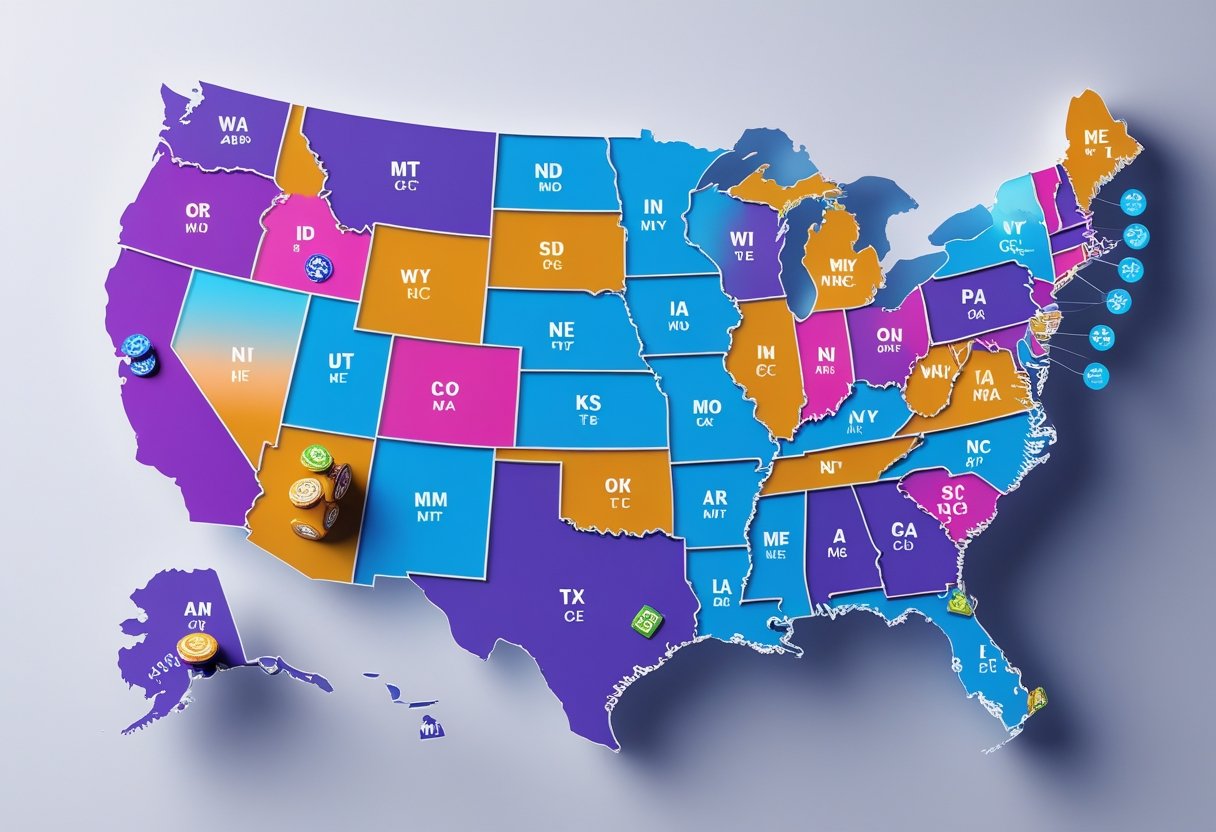
How many casinos are in each state? It’s all over the map—literally.
Nevada leads with about 345 casinos. Montana follows with over 170, then Louisiana with 136, and Oklahoma with 109.
States With the Highest Number of Casinos
Nevada is the undisputed king here, with around 345 casinos. Las Vegas alone is packed with iconic resorts like the Bellagio.
Montana has more than 170 casinos, though most are smaller venues. Louisiana runs 136 casinos, mixing riverboats and land-based spots.
Oklahoma has 109, mostly tribal casinos. Fun fact: the WinStar World Casino in Oklahoma is the biggest casino in the country by gaming floor space.
These four states rake in a big chunk of the nation’s casino revenue. There’s clearly strong demand and friendly laws.
States With the Fewest Casinos
Hawaii and Utah have zero casinos—total ban, no exceptions.
Alaska, New Hampshire, Tennessee, Vermont, and Virginia also have no casinos. It’s not always a hard ban, but for now, there’s no casino action.
That means these states miss out on tax dollars from gambling. Will they change their minds someday? Maybe, but for now, you’ll need to cross state lines if you want to play.
Types of Casinos by State
Commercial casinos operate under state licenses and pay taxes right to the government. Nevada, Pennsylvania, and New Jersey rely heavily on this income.
Tribal casinos are on Native American land and follow federal and tribal rules, not state ones. You’ll see these in states like Oklahoma, California, and Connecticut.
Riverboat casinos are a quirky twist. In places like Louisiana, Mississippi, and Illinois, the law used to require gambling on the water, but now most are docked permanently.
Some states only allow one type; others mix it up. The combination changes the vibe and the revenue, so your experience really depends on where you go.
Casino Revenue and Industry Statistics
In 2024, US casinos pulled in nearly $50 billion from traditional gaming. That’s a huge number, but it varies a lot state by state.
Nevada is still the top dog for revenue, but newer markets are growing fast and bringing in more tax dollars.
State Casino Revenue Rankings
Nevada is the clear leader in casino revenue. In 2024, it outpaced every other state.
New Jersey comes in second, thanks to Atlantic City and a strong online gaming market. Pennsylvania is third, with Michigan, Indiana, and Ohio not far behind.
Older casino markets usually make more money, but some newer states are catching up. There’s a big gap between the top earners and the rest, though.
Growth Trends in Casino Industry
Traditional casino gaming hit record highs in 2024, with $49.78 billion from slots and table games. Slot revenue alone grew 1.3% in the third quarter, reaching $9.1 billion.
Online gaming is growing even faster. Seven states combined for over $8 billion in iGaming revenue in 2024. Michigan’s online casinos alone brought in $2.4 billion—a nearly 24% jump from 2023.
The online gambling market could hit $40 billion by 2029. Fourteen states reported year-over-year revenue increases in the third quarter of 2024.
Casino Tax Revenue by State
Casinos are a goldmine for state tax revenue. The industry brings in about $52.71 billion in taxes and tribal revenue sharing each year.
Michigan collected $451.4 million from online gambling operators in 2024, making up almost all the state’s gaming tax revenue. Tax rates vary by state, so the take-home for governments is all over the place.
States with established casino markets pull in hundreds of millions—or even billions—every year. That money funds everything from schools to highways.
The total economic impact of gambling in the US is around $328.65 billion, supporting about 1.75 million jobs.
Major Casino Destinations and Markets
Nevada dominates, no question, with Las Vegas bringing in billions annually. But New Jersey’s Atlantic City is still the East Coast heavyweight.
Other states like Pennsylvania, Oklahoma, and Connecticut have become big regional destinations too.
Nevada and the Las Vegas Strip
Nevada has 492 commercial casinos as of 2025. The Las Vegas Strip is the heart of it all, packed with legendary properties.
Caesars Palace has been a landmark since 1966, offering about 166,000 square feet of gaming. It’s got the Colosseum, the Forum Shops, pools—the works.
Bellagio is famous for its fountains and poker room, with roughly 156,000 square feet of gaming space.
Wynn Las Vegas, together with Encore, boasts around 190,000 square feet. High-limit salons, a golf course, top-notch restaurants—it’s all there.
These mega-resorts mix slot machines, table games, fine dining, shows, and luxury rooms. Millions visit the Strip every year.
New Jersey and Atlantic City
New Jersey legalized casinos in 1976, putting Atlantic City on the map. The scene has changed a lot, especially since online gambling launched in 2013.
Borgata Hotel Casino & Spa leads the way in revenue, with a slick gaming floor, tons of slots, and poker. The vibe is modern, with luxury touches and lively nightlife.
Ocean Casino Resort offers about 135,000 square feet of gaming, plus ocean views and boardwalk access.
Atlantic City’s boardwalk and summer crowds help traditional casinos stay competitive, even as online options grow. There’s a mix of properties for every budget and style.
Emerging Casino States
Pennsylvania has become a major player without a single “casino city.” Parx Casino near Philly and Rivers Casino in Pittsburgh serve big metro areas with slots, tables, and poker.
Oklahoma’s WinStar World Casino is the biggest in the US, with over 600,000 square feet of gaming. It’s run by the Chickasaw Nation and split into global-themed sections.
Connecticut’s Mohegan Sun and Foxwoods are huge tribal casinos, each with hundreds of thousands of square feet and a variety of themes.
Florida’s Seminole Hard Rock Hotel & Casino Hollywood stands out with its 245,000 square feet and guitar-shaped tower. These newer markets keep locals and regional players from heading out of state.
Casino Types and Gaming Options
There are 1,011 casinos in the US, split between commercial and tribal, plus riverboats and racinos. Each offers different games—slots, tables, poker, you name it.
Tribal vs. Commercial Casinos
Tribal casinos are on Native American land, regulated by federal rules and tribal-state compacts. Commercial casinos follow state laws and pay direct gaming taxes.
Right now, 47 states offer some kind of casino gaming, either tribal or commercial.
Commercial casinos made $49.89 billion from traditional games in 2024, paying $15.91 billion in taxes. Tribal casinos don’t pay the same taxes but operate under different deals with states.
There are 492 commercial casino locations in 38 jurisdictions. Tribal casinos actually outnumber commercial ones and sometimes offer more gaming options, depending on their compacts.
Riverboat Casinos and Racinos
Riverboat casinos started because some states only allowed gambling on water. These days, most are permanently docked.
Racinos are horse racing tracks with casino games—mainly slots, sometimes tables. They popped up in states looking to boost racing by adding casino revenue.
You’ll find racinos in several states, helping keep the racing industry afloat while giving gamblers more options.
Popular Casino Games
Slot machines are the backbone of casino revenue almost everywhere. Walk into a big casino and you’ll spot hundreds of slots, from old-school fruit machines to flashy video slots with all kinds of bonus features.
Table games cover:
- Blackjack
- Roulette
- Craps
- Baccarat
Poker rooms usually run separately from the main table games. Here, you’re up against other players, not the house, and the casino just takes a cut from each pot.
Popular poker games? Think Texas Hold’em, Omaha, and Seven Card Stud. If you’re in Nevada, California, or Florida, you’ll find big poker rooms with dozens of tables.
Online Casino and Sports Betting Landscape
The U.S. online gambling scene is honestly a patchwork—each state decides what’s allowed and what’s not. Online casinos are legal in fewer places than sports betting, so the markets for iGaming and sports betting don’t always overlap.
States With Regulated Online Casinos and iGaming
Right now, you can play online casino games and poker in seven states: New Jersey, Pennsylvania, Michigan, West Virginia, Delaware, Connecticut, and Rhode Island. Nevada’s a bit odd—they allow online poker but keep other online casino games off-limits.
New Jersey kicked things off back in 2013 and still brings in huge online casino revenue. Pennsylvania and Michigan jumped in later but quickly became top iGaming spots. These three states rake in most of the online casino money in the U.S.
The iGaming sector is growing fast—over 22% year-to-date in 2025. States that allow online casinos collect a lot of tax revenue, and players get access to slots, table games, and poker on licensed sites.
Legal Sports Betting States
Sports betting is now legal in 38 states, plus Washington D.C. As of late 2025, you can place mobile bets in most of those, though a few states only let you bet in person at sportsbooks.
New York leads the pack for sports betting revenue, even though it launched later than some. Other big money states include New Jersey, Pennsylvania, Illinois, and Ohio.
Since the Supreme Court tossed out the federal ban in 2018, the sports betting market has exploded. Thirty states rolled out full mobile sports betting between 2018 and 2024, making it way easier to place a bet than to find a legal online casino.
Sports betting operators are pulling in billions every year, but tax rates and licensing rules are all over the place depending on where you are.
Key Operators in Online Gambling
DraftKings and FanDuel are everywhere in sports betting. In most states, they own the biggest share of the market—sometimes 60-80% of all mobile bets.
BetRivers has staked out a solid spot in both sports betting and online casinos in several states. Unibet is around too, but they stick to states where their parent company already has a license.
The lineup of operators isn’t always the same for iGaming and sports betting. Some companies are all-in on casino games, others just do sportsbooks. The biggest names usually offer both if the state lets them.
Frequently Asked Questions
Two states have a total ban on casino gambling, and the number of casinos in the rest of the country is honestly all over the map. Nevada’s got 345 casinos, but if you want to know where gambling is legal, you’ll need to check the rules for each state.
Which states in the U.S. do not permit casino gambling?
Hawaii and Utah are the only states that don’t allow any type of casino gambling. They’ve kept a hard line—no casinos, period.
A few other states don’t have any physical casinos at all. Alaska, New Hampshire, Tennessee, Vermont, and Virginia fall in this group, but their laws aren’t quite as strict as Hawaii and Utah’s.
How does the number of casinos per capita vary by state?
Montana’s got one of the highest ratios of casinos to people. With over 170 casinos and not that many residents, it’s easy to find a place to play.
Nevada has the most casinos in total—345—but its per capita number is lower than Montana’s because of its bigger population. States with fewer people and a decent number of casinos sometimes end up with higher per capita rates than the giants.
What are the top ten states in terms of casino quantity?
Nevada comes in first with about 345 casinos. Montana is second with over 170.
Louisiana’s next, boasting 136 casinos. Oklahoma lands in fourth with 109. The rest of the top ten shifts as new casinos open or close around the country.
Can you list all the states where casino gambling is legally allowed?
Forty-eight states let you gamble in some form, but not all have traditional casinos. Commercial casinos are legal in a bunch of states, but tribal casinos are also a big part of the picture.
Only Hawaii and Utah ban all casino gambling. Everywhere else, you’ll find either commercial casinos, tribal casinos, or both—depending on how state and federal laws line up. Some states only allow tribal casinos and keep commercial ones out.
In which state is the gambling industry the largest by revenue?
Nevada tops the charts for gambling revenue—no surprise there. Las Vegas pulls in visitors from everywhere, and that drives the numbers way up.
Tourism and those massive resort casinos keep Nevada’s gambling industry on top. The state’s reputation and long history mean it’s still the king when it comes to revenue.
How many states currently have legal casinos with slot machines?
Forty-seven states have some form of legal casino gaming, either through tribal or commercial operations.
Most of these states allow slot machines in their casino facilities.
Only Hawaii and Utah maintain complete bans on casino gaming and slot machines.
The availability of slot machines depends on local regulations. Some states restrict them to certain casino types or locations.